With the different styles, colours, models and levels of protection available today, choosing the most suitable fly mask is not so easy.
For many horse owners, the wide range on offer results in the purchase of a lower quality mask that is less effective in terms of protection or does not fit perfectly, or sometimes both...
Buying the cheapest mask in a shop can prove more expensive in the long run than buying a high-quality mask straight away. A mask that does not fit perfectly or is not adjustable will be damaged or lost more quickly when out in the field and will need to be replaced. We hear that some owners need up to three masks per season for their horse...
So feel free to read through the tips we would like to give you before you buy fly masks for the coming season.
Which style of mask should you buy?
Full mask, with face, ear and nose protection?
A full mask is a great alternative if your horse is very sensitive to flies, horseflies, mosquitoes, etc., or if your horse's nose/muzzle needs to be protected from the sun. For overall protection, there is the 'Equilibrium Field Relief Max', which blocks more than 70% of UV rays and keeps flies at bay.
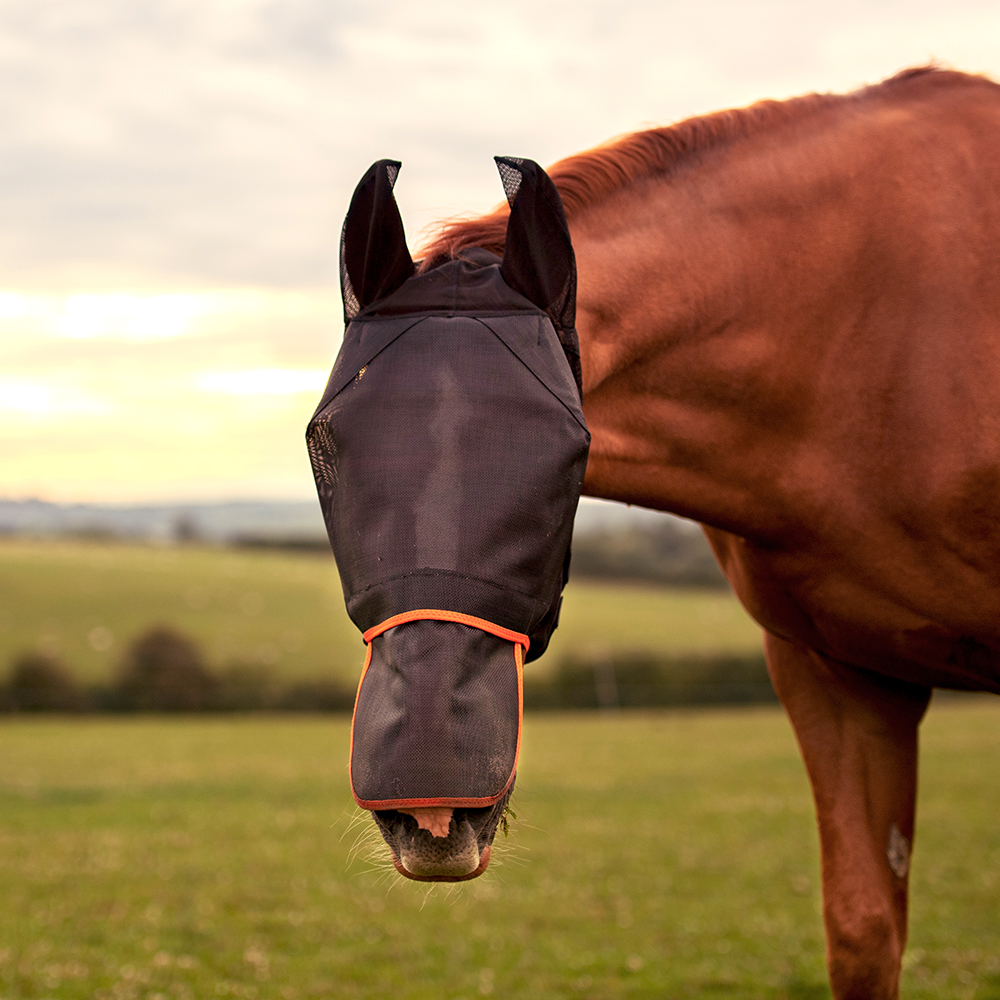
Fly mask with ears?
Horses that are sensitive to irritation from mosquito bites often benefit from extra protection for their ears. However, be careful when buying a mask with ears. Are the ears pre-shaped (in the shape of horse ears)? All too often, we see masks with “incorrect ears” – ears that are too straight, too short, too long... causing them to slip out of place and making the entire mask unstable. Ears that are too tight cause irritation and chafing.
Take a look at the 'Equilibrium Field relief Midi with ears’ to see how the ergonomically shaped ears ensure that this mask fits perfectly.
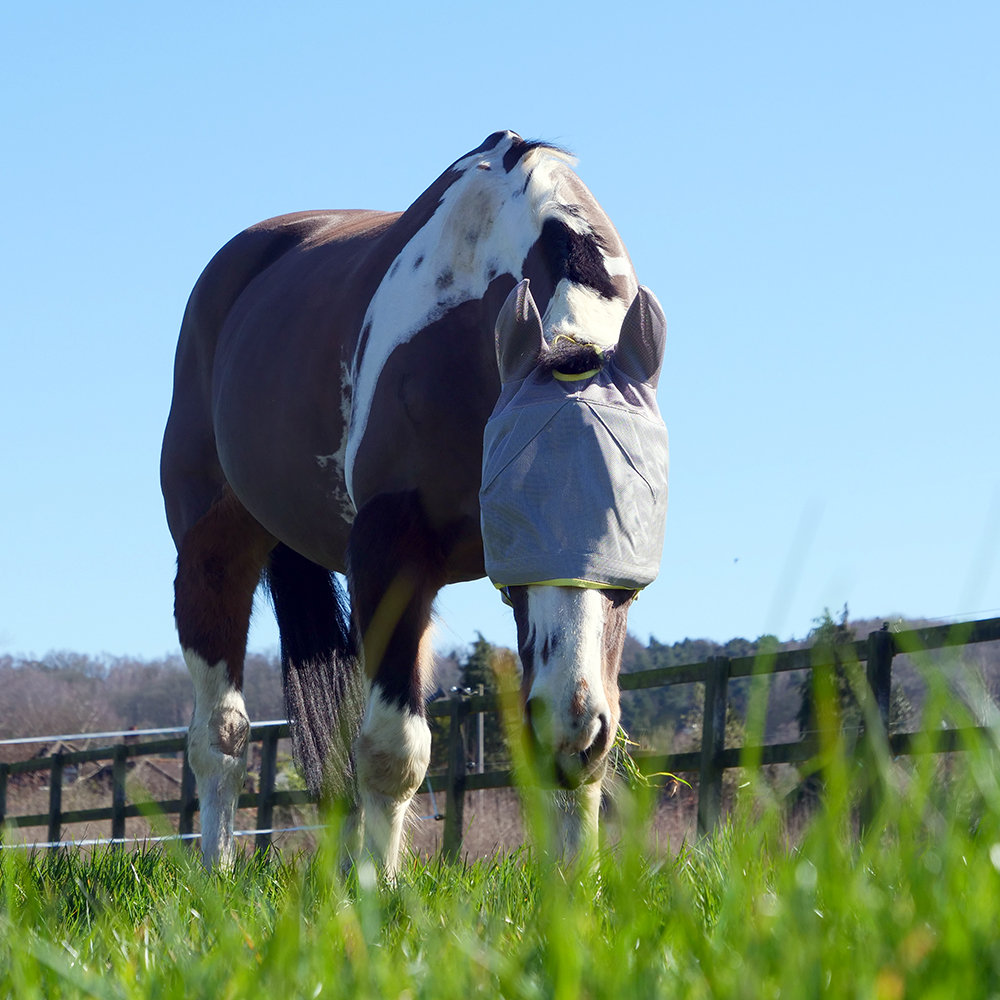
Fly masks without ears?
Many horses find masks with ears uncomfortable; they start to rub when they feel something on their ears, causing them to rub the mask off partially or completely. Horses that you should not touch or can only touch their ears with difficulty are best not bothered with a mask with ears. For these horses, look for a mask with an adjustable fastening behind the ears so that you do not have to pull the mask over the head and ears.
For this type of horse, a model such as the 'Equilibrium Field relief Midi without ears’ is ideal. It is a mask that provides excellent protection and is easy to put on and take off without disturbing the horse.
How do I find the right size for my horse/pony?
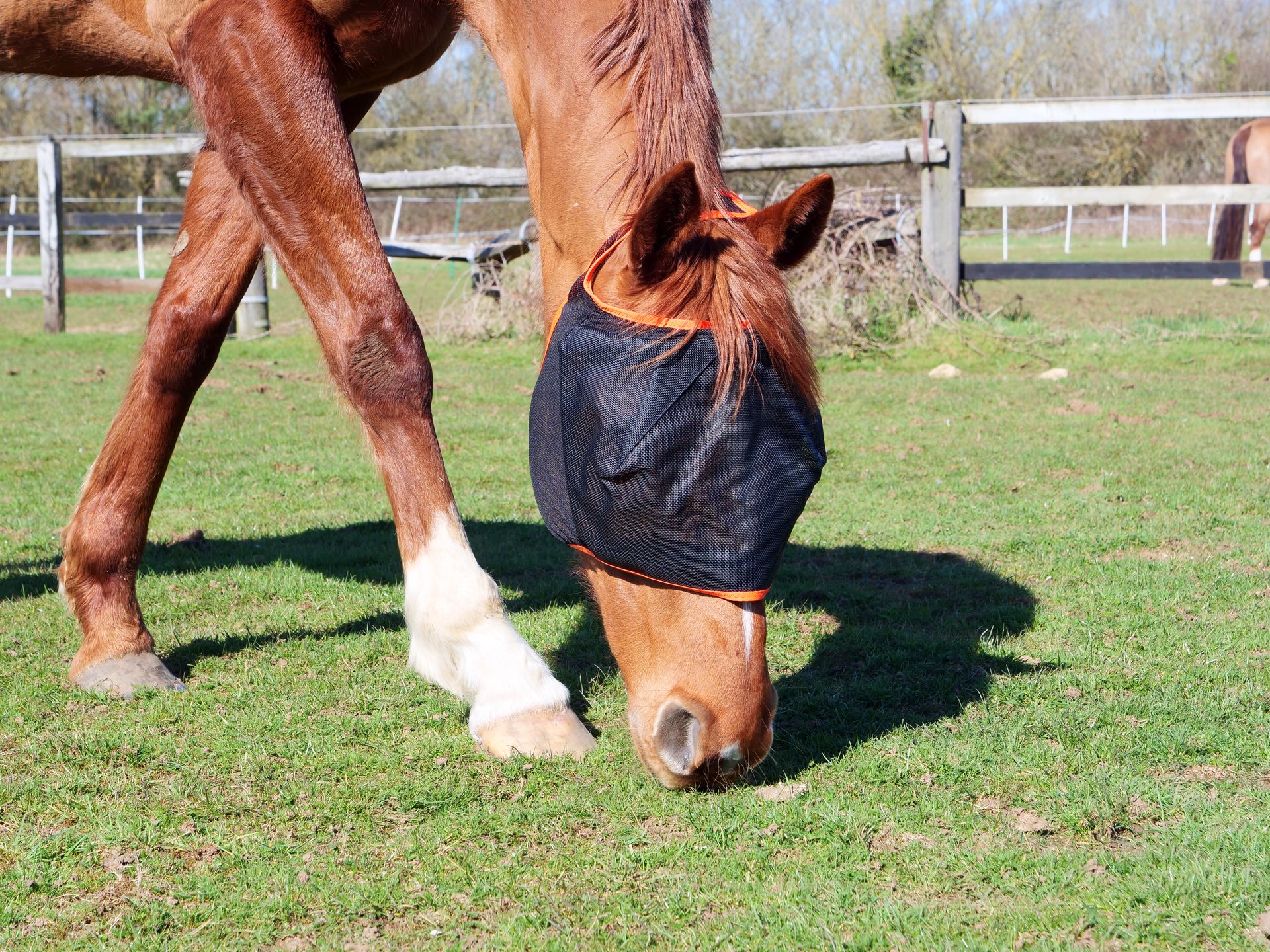
As a general rule, you can match the size of the mask to the size of your headpiece. This certainly applies to Equilibrium Field Relief masks, but can also serve as a guideline for other brands.
Regardless of the brand, your fly mask should always fit well without any gaps above the eyes or on the nose. If a mask does not fit properly, your horse will quickly lose it and, of course, it will not really offer any protection against flies, mosquitoes, etc. that can crawl underneath it. To help ensure that the mask fits properly, look for elastic seams/edges and sufficient adjustment options. Equilibrium Field Relief masks are easily adjustable with Velcro behind the ears and under the chin for an optimal fit.
How should I adjust a mask around my horse/pony's eyes?
In contrast to the close fit of the mask elsewhere on the head, the mask must provide sufficient space for the eyes. Veterinarians agree that a mask that fits too tightly around the eyes can rub and cause damage to the eyes or the surrounding sensitive skin. In addition, a mask that fits too tightly will prevent the eyelashes from moving, which has an irritating effect on horses.
Ensure that the chosen mask has a type of ‘structure’ above the eyes that will not fold inwards and thus come into contact with the eyes. As an example, you can look at the Equilibrium Field Relief masks. These have pre-formed structures in the eye area so that there is sufficient space between the mask and the eye.
Will my horse still be able to eat and drink normally with a fly mask on?
A correctly fitting fly mask should not restrict a horse in any way in any of its habits or movements. The mask should stay in place without twisting, sliding, slipping or anything else. That is why a correct fit is so important. The elastic seams and fastenings play an important role in this, as they ensure that the mask can move with your horse.
Is UV protection important?
Horses with little or no skin pigmentation around the eyes and on the nose are more sensitive to the effects of the sun. Just like people with pale skin, exposure to the sun can cause watery eyes, sunburn, or even cataracts or cancer. A UV-protective mask will block some of these harmful rays and thus protect the skin. In the short term, this provides immediate comfort to your horse, prevents sunburn and, in the long term, provides extra protection against more serious conditions. Equilibrium Field Relief masks have been tested for UV protection and have been shown to block more than 70% of harmful rays! For those looking for even more... 100% UV protection does not exist...
Is the colour of a fly mask important?
This issue has been discussed at length and extensively, without any conclusive results. It is generally accepted that masks with a dark mesh have a sunglasses effect on light-sensitive horses, but at the same time we know that dark colours absorb heat rather than repel it. The opposite is true for light-coloured masks. However, there is no scientific evidence for the above...
Will my horse sweat with a fly mask?
If your horse sweats quite easily, it is important to consider the materials used in the manufacture of the masks you are considering purchasing. Generally speaking, the front of all masks is made of mesh so as not to restrict the horse's vision; however, the weight of the material used varies greatly! Mesh that is too thick can rub and cause your horse to sweat more because the air cannot circulate freely. Mesh that is too fine, on the other hand, will not be stiff enough to keep the structure above the eyes in shape. Also check how the seams and edges are finished! It has become very popular to cover fastenings, edges and seams with fleece to prevent rubbing. Sometimes these are made of real wool, which has thermoregulatory properties; unfortunately, the cheaper synthetic fleece is usually used, which causes chafing and irritation. Although the synthetic materials provide a soft layer between the mask and the skin, they only exacerbate the heating of the head and thus sweating. Equilibrium Field Relief masks have a soft, spongy lining that stays cool and prevents chafing.
Can I leave the fly mask on day and night?
Actually, a horse should not wear a fly mask at night. If your horse has an eye condition and your vet recommends wearing a fly mask 24/7, you can safely leave the Field Relief Masks on day and night. Please note that fly masks can reduce visibility in the dark!
For horses that are outside around the clock, we recommend that you check them regularly. Put the mask on when there is less pressure from flies, etc., and take it off regularly to prevent the risk of chafing.
How long can I leave a fly mask on?
How long you can keep a mask on will depend on your daily routine (how long your horse is allowed outside each day), the type of mask you buy and the weather. Most masks are designed to be worn for a few hours a day. However, they should be removed daily and washed regularly. Removing the mask will also give you the opportunity to check for any skin irritations or chafing and whether the mask still fits properly.
Because regular washing is important, it is advisable to have more than one mask for your horse. Regular washing prevents bacterial infections if the mask rubs. We also advise against leaving your horse with a wet mask on to prevent irritation and worse... .
Does my mask need to be replaced every year?
Many owners buy new masks for their horses every year. If last year's mask is still in good condition, you can of course continue to use it. We would like to point out that a sturdy mask is less expensive in the long run than a cheap mask that needs to be replaced three times a season.
Before reusing last year's fly masks, we recommend checking that none of the fastening straps are broken, that the mesh is still in good condition, and that the “structure” above the eyes is still intact. If this is not the case, have them repaired in good time or buy new ones!
In any case, do it in good time. With the mild winter we've had, and last year in mind, we can expect quite a few pests this spring and summer!
And what about fly rugs?
What are the essential features of a good fly rug?
A good fly rug protects your horse from flies, mosquitoes and other insects, but must also remain comfortable for the horse. The most important feature is a breathable but tightly woven fabric. This fabric must be fine enough to reduce insect bites, but open enough to provide sufficient ventilation so that the horse does not overheat on hot days.
In addition, it is important that a fly rug provides protection in the right places. Think of a belly flap, a long tail flap and possibly a neck piece. These areas are particularly sensitive to flies and insect bites.
The comfort of the horse also plays a major role. A high-quality rug has, for example:
- a non-irritating lining in sensitive areas;
- a pressure-reducing panel at the withers;
- extra space at the shoulders so that the horse can move freely.
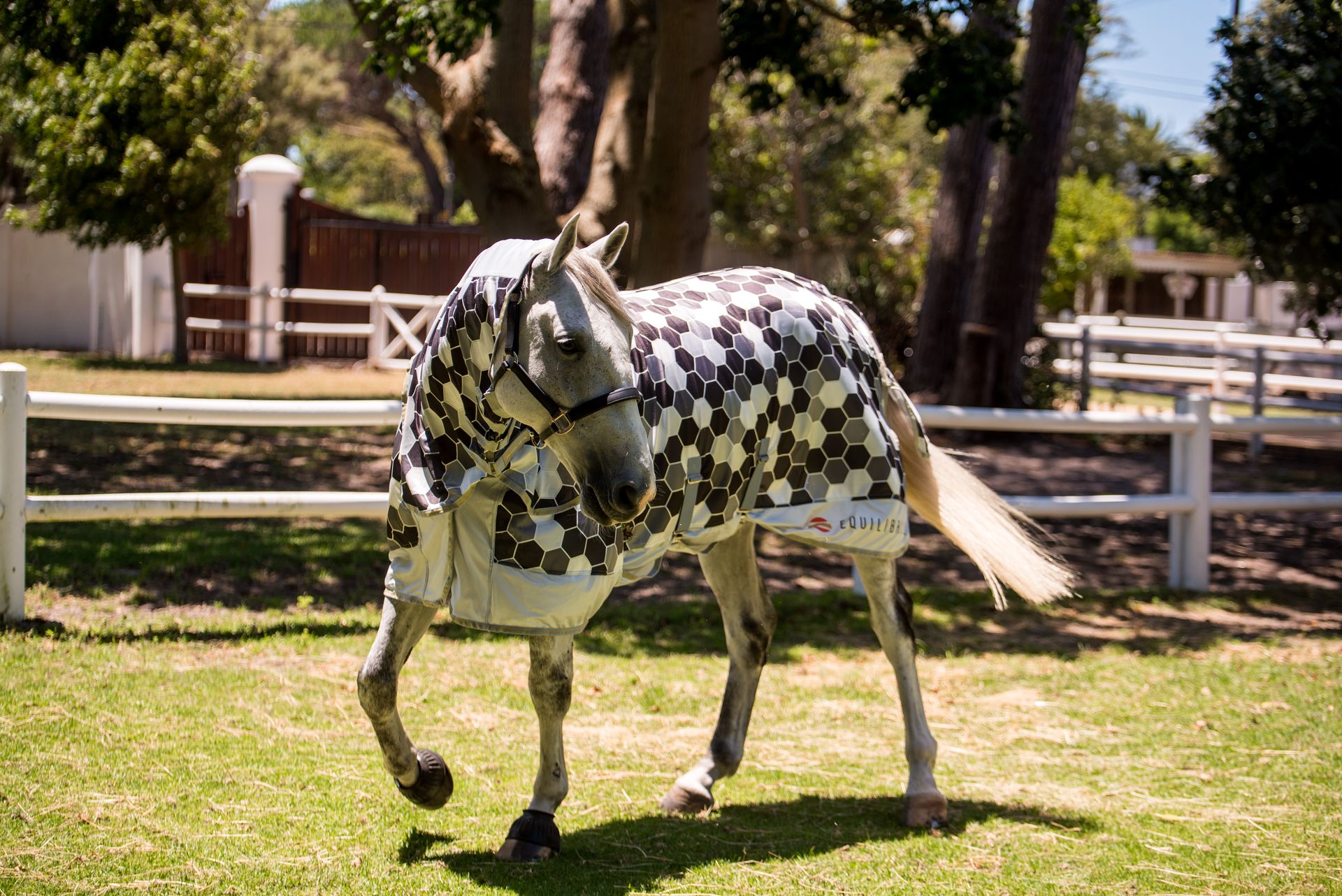
A good example of an innovative fly rug is the 'Equilibrium Field Relief Fly Rug'. This rug is specially designed with shoulder freedom, a pressure-reducing panel on the withers and a breathable mesh fabric so that horses can move freely while remaining protected from insects.
What colour(s) should the blanket definitely have?
The colour or pattern of a fly rug can have more influence than many riders think. Research and practical tests show that certain patterns attract fewer flies.
Another good example is the 'Equilibrium Field Relief Fly Rug'. This fly rug has a monochrome hexagonal pattern. Tests showed that on average 51% fewer flies landed on this pattern than on plain or other coloured rugs.
This effect occurs because flies have different vision than humans. Patterns with contrast and geometric shapes can disrupt their vision, making it more difficult for them to assess where exactly they can land. As a result, they are less likely to land on the horse.
In addition to patterns, light colours often play a role. Light blankets reflect sunlight better and help to keep the horse cooler during hot summer days. That is why colours such as light grey, beige or white are popular for fly rugs.
How should the blanket be adjusted?
The fit of a fly rug is just as important as the material. A rug that does not fit properly can rub, shift or restrict the horse's freedom of movement.
A good fly rug should:
- have sufficient freedom of movement, especially around the shoulders;
- not be too tight, so that the horse can walk, roll and graze freely;
- not rub against the withers, shoulders or chest;
- remain stable, for example thanks to cross straps or a belly flap.
Many modern fly rugs are therefore designed with special panels or extra fabric around the shoulders. This allows the horse to move its shoulders fully forward without the rug pulling or rubbing. Rugs such as the 'Equilibrium Field Relief Fly Rug', for example, use extra material around the shoulders and a special withers panel to avoid pressure points.
When fitting a fly rug, it is important that:
- the chest closure fits snugly but does not pinch;
- the blanket does not slide backwards;
- the length is correct so that the hindquarters remain well covered.
When a fly rug fits well, the horse will feel comfortable and the rug will also stay in place better during movement.